
16,500Trees Planted
2.5kmFencing Removed
Year 2Underway
🌿 Where We Are Now
We want to accelerate nature recovery across the country by reintroducing keystone species, removing man-made barriers, and conserving existing natural spaces to allow natural processes to thrive. Our mission is to demonstrate that a wilder Canada is possible and inspire others to engage in rewilding — with the goal of creating a climate-resilient, healthy, and prosperous society.
We're currently working across two private properties on the Niagara Escarpment. No heavy machinery, no outside inputs — just patient, hands-on restoration work to let the land begin recovering on its own terms.
Active Projects
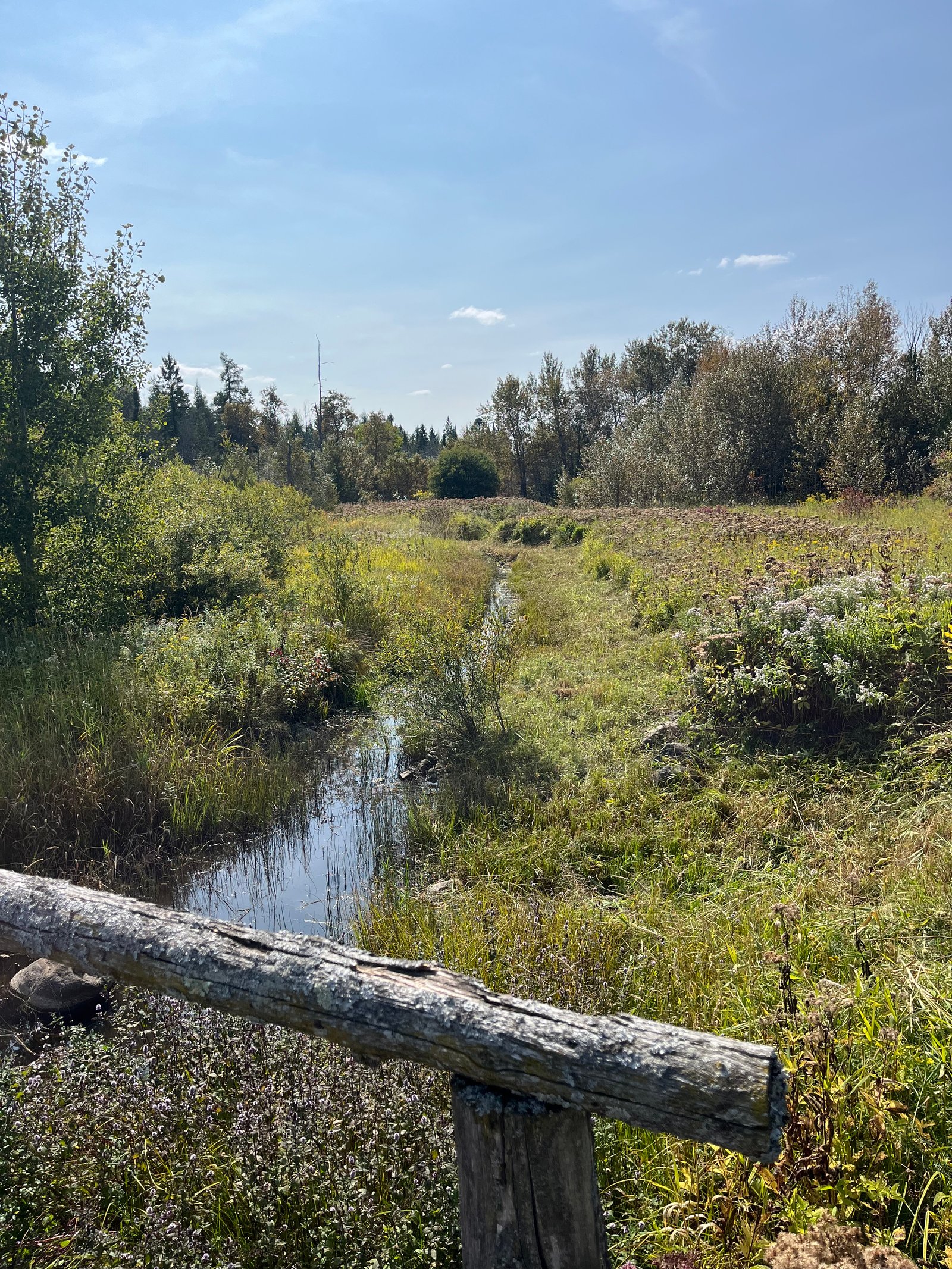
🌾 Brookdale Farm
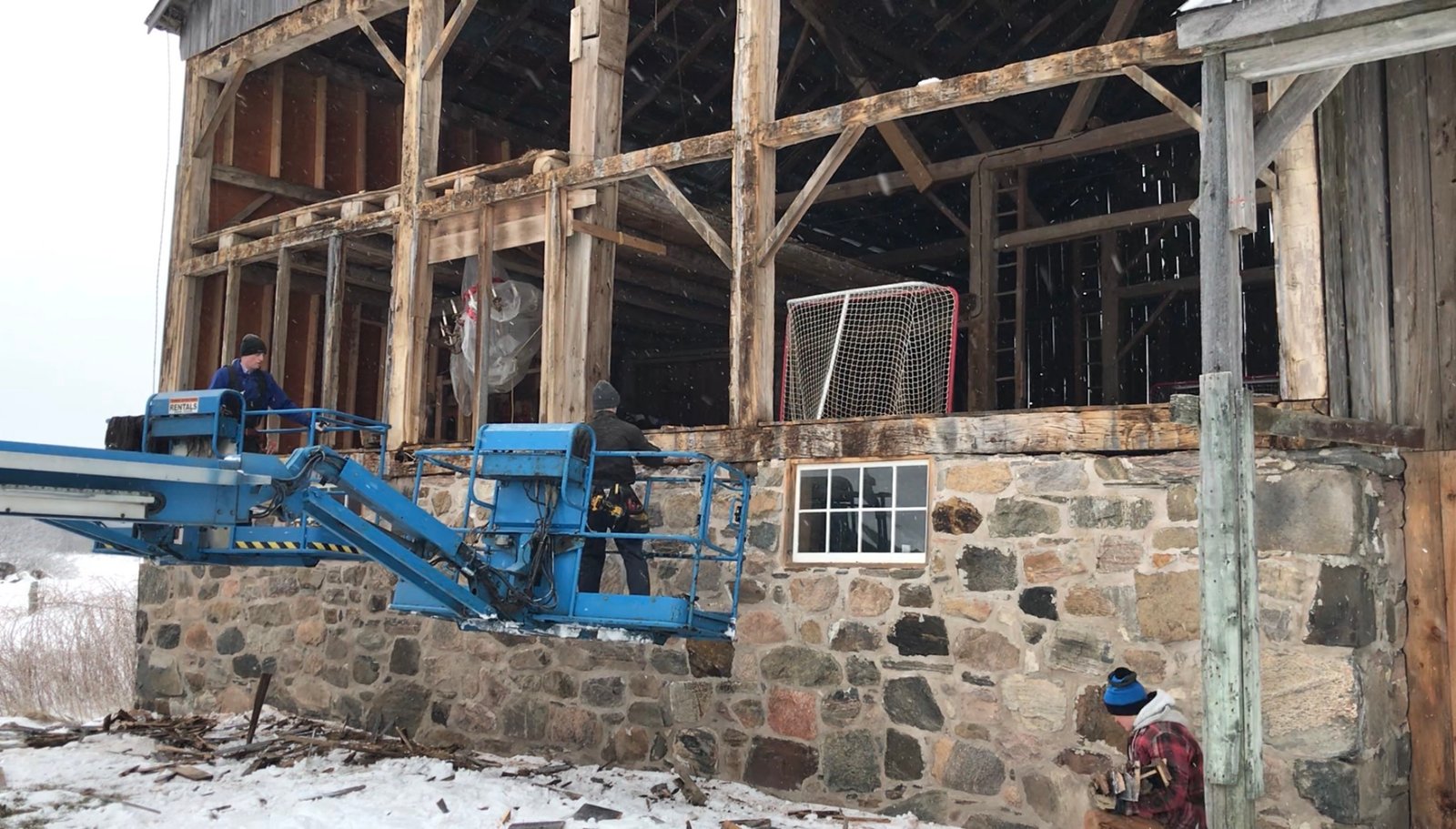
🐦 Swallowfield Farm
“Live Lightly.”
Founder & Executive Director
Restoring Process,
Not Just Place
Rewilding is one of the most promising — and most misunderstood — ideas in modern conservation. It is not about returning to a specific historical moment. It is about restoring the processes that allow ecosystems to self-organise, recover, and flourish.
For most of human history, large-scale human activity was localised. Ecosystems had room to recover between disturbances. Predators kept prey populations in check. Rivers flooded and meandered. Forests burned and regrew. Wetlands stored water and filtered runoff. The land was dynamic, not static — and that dynamism created the biological richness we inherited.
Over the past two centuries, industrial agriculture, logging, urban expansion, and the suppression of natural processes have simplified landscapes dramatically. Many Canadian ecosystems now support a fraction of the species diversity they once did — not because the land is incapable of more, but because we have not given it the conditions to produce it.
Rewilding asks a different question: instead of asking what we should add to a damaged landscape, it asks what we should stop doing — and what we should gently restore — to allow natural recovery to take over.
Isolated habitat patches support far less biodiversity than connected ones. Rewilding prioritises creating or restoring landscape-scale corridors — along rivers, through hedgerows, across farm boundaries — that allow species to move, find mates, and recolonise lost habitat.
Ecosystems need predators. Without them, prey populations balloon, overgraze, and simplify habitats. Rewilding works to restore trophic relationships — sometimes through the reintroduction of keystone species, sometimes simply by reducing human pressure enough for natural dynamics to reassert themselves.
Fire, flood, wind-throw, beaver dams, and migratory grazing are all natural disturbances that ecosystems evolved around. Rewilding aims to restore these processes — or their functional equivalents — so that the land can generate its own complexity rather than depending on ongoing human management.
Sometimes the most powerful intervention is stopping an old one. When fields are no longer mowed, when fences come out, when streams are no longer channelised, nature fills the vacuum rapidly. Passive rewilding — simply stepping back — is often underestimated as a tool.
Rewilding at meaningful scales requires landowner cooperation, community buy-in, and Indigenous partnership. It is not a top-down conservation model. The most successful projects build the case locally — demonstrating what recovery looks like on one property, then inviting neighbours to join.
Ecosystems do not recover in years — they recover in decades and centuries. Rewilding requires a fundamentally different relationship with time. We are planting trees whose shade we will not sit in. That is exactly the point.
Active restoration work across two properties on the Niagara Escarpment. Wildlife confirmed on each property is woven into the work — each project shaped by what's already living there.
The drainage ditch was straightened decades ago — too shallow, too fast, and too warm for brook trout. We're removing a failed culvert, adding woody debris to deepen pools, and planting a riparian buffer of cedar, dogwood, and ostrich fern. No machinery — everything by hand.
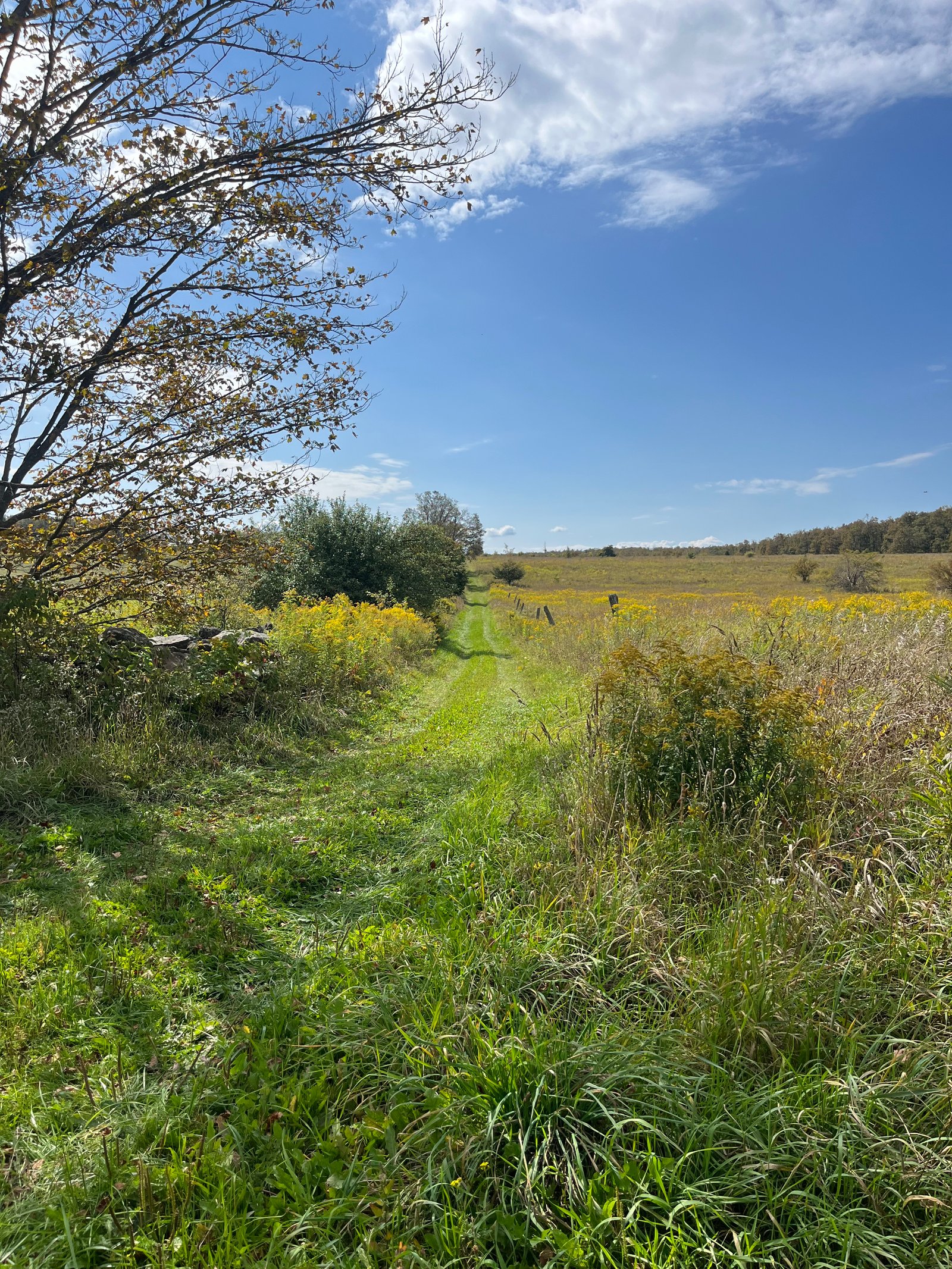
Extending the property's protected perimeter to include more edge habitat — hedgerow, scrub, and transitional woodland. Fence line corridors are disproportionately important for small mammals, pollinators, and nesting birds moving through agricultural landscapes.
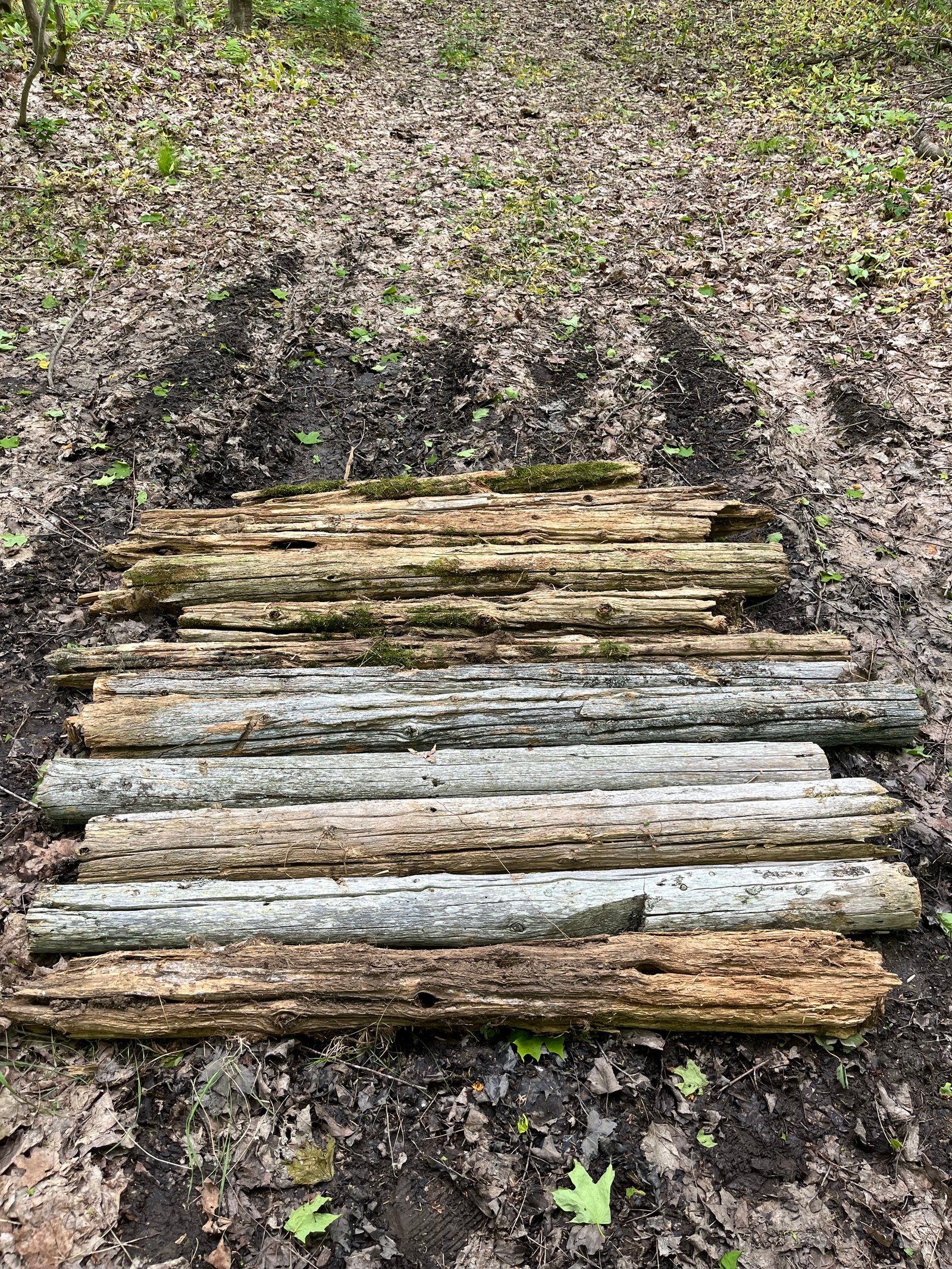
Mounded garden beds built from buried logs, branches, and woody debris — a traditional technique that builds soil fertility over many years as the wood slowly decomposes. Reduces watering needs, improves drainage, and creates habitat for soil invertebrates and small mammals.
Building a rigorous species inventory using iNaturalist, trail cameras, and seasonal amphibian egg mass counts. Without a documented baseline, it's impossible to measure recovery. Every capture and identification contributes to a picture that will matter more in ten years than today.
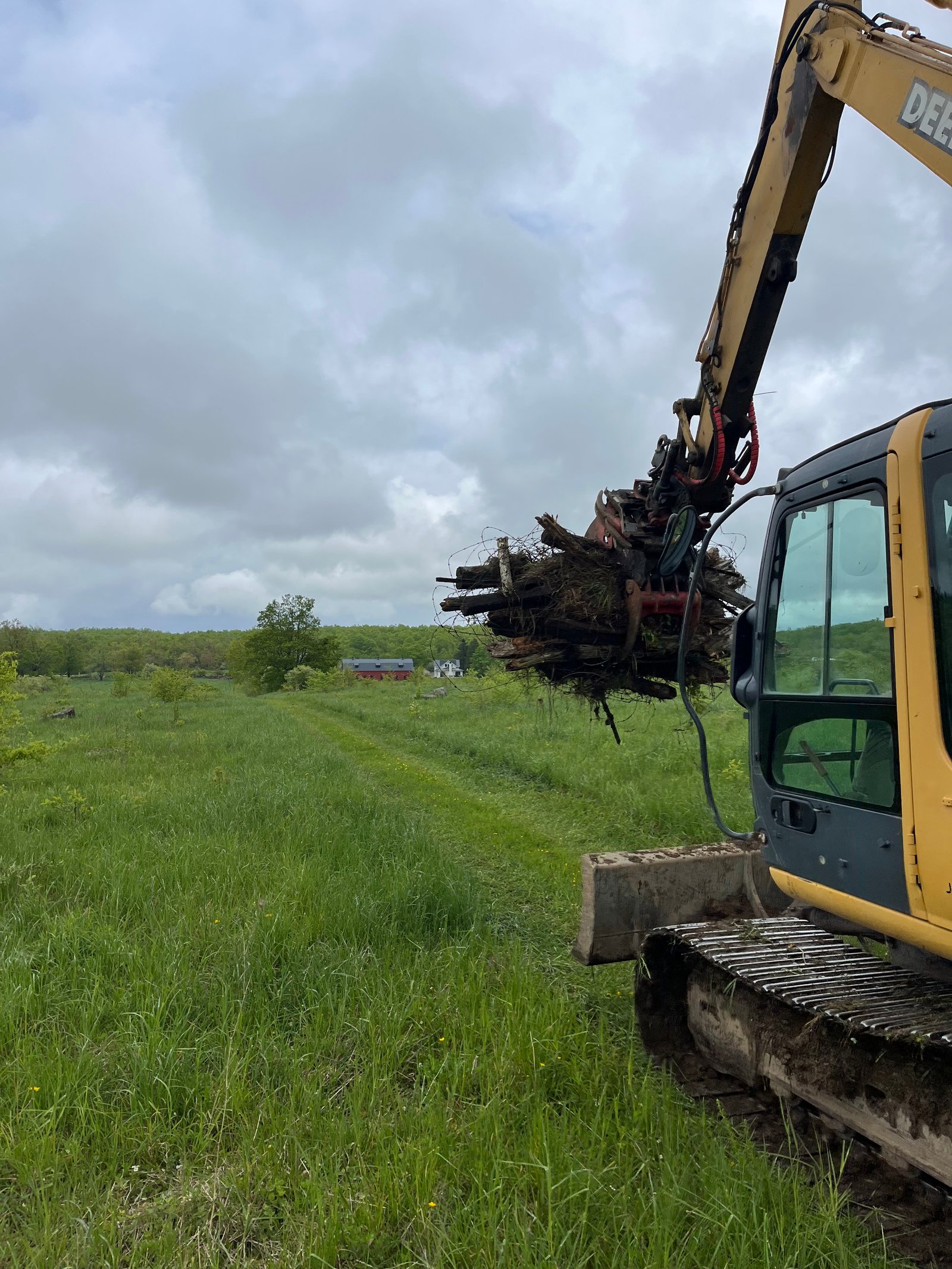
Agricultural wire that hasn't held livestock in years cuts across field edges, through the woodlot, and across continuous hedgerow. We're pulling all 2.5km by hand — leaving posts as habitat structure where they're not rotted. Once the wire comes out, movement restores itself.
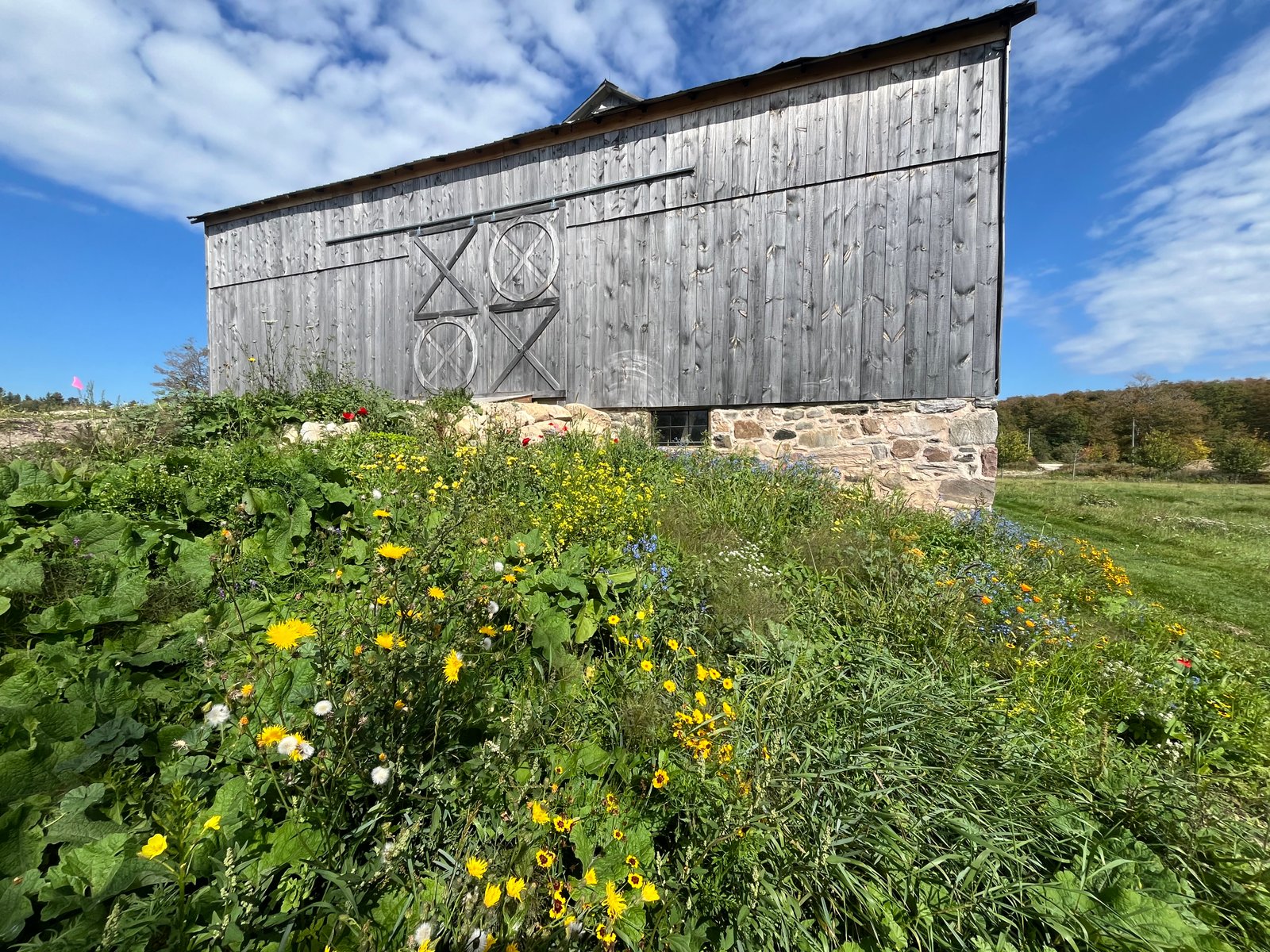
The barn is being selectively stabilised — reinforcing the frame where it's failing, preserving access points for nesting species, and leaving its character intact. Targeted intervention only: the goal is to keep the structure standing without disturbing the life it already shelters.
Milkweed seeded into south field margins for Monarchs. Elderberry and red-osier dogwood propagated from existing property stock. Native wildflower mixes seeded into areas where mowing has been discontinued — no off-property inputs, everything sourced on site.
Trail cameras at fence removal sites and woodland edges are building the first systematic wildlife record for Swallowstorn Farm. One Blanding's Turtle confirmed at the pond margin — a significant find for a threatened species. All sightings logged to iNaturalist.
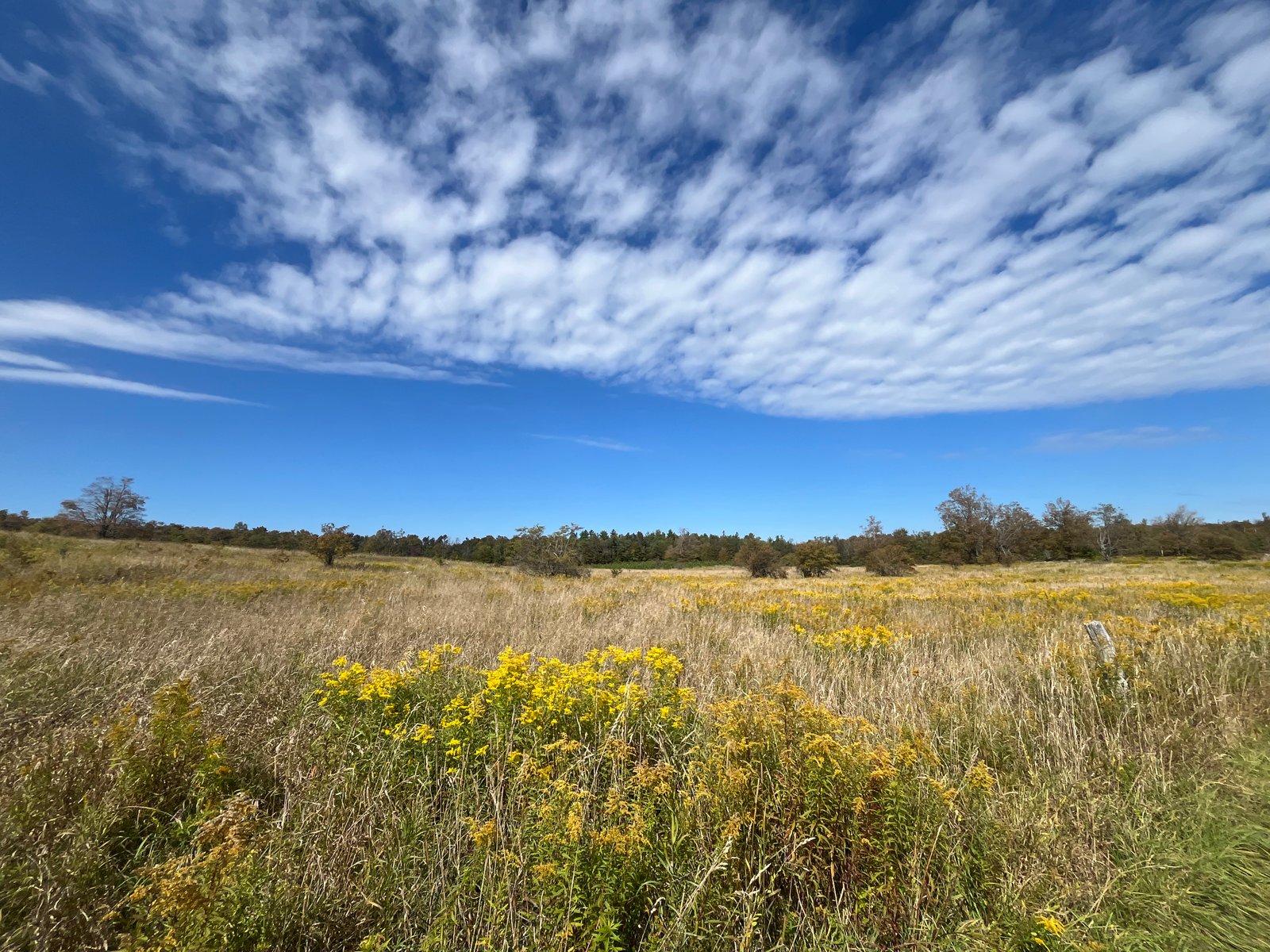
Transitioning farmed portions of the property toward regenerative practices — reducing tillage, building soil organic matter, and integrating cover crops and native perennials along field margins. The goal is a farm that produces food and habitat simultaneously.
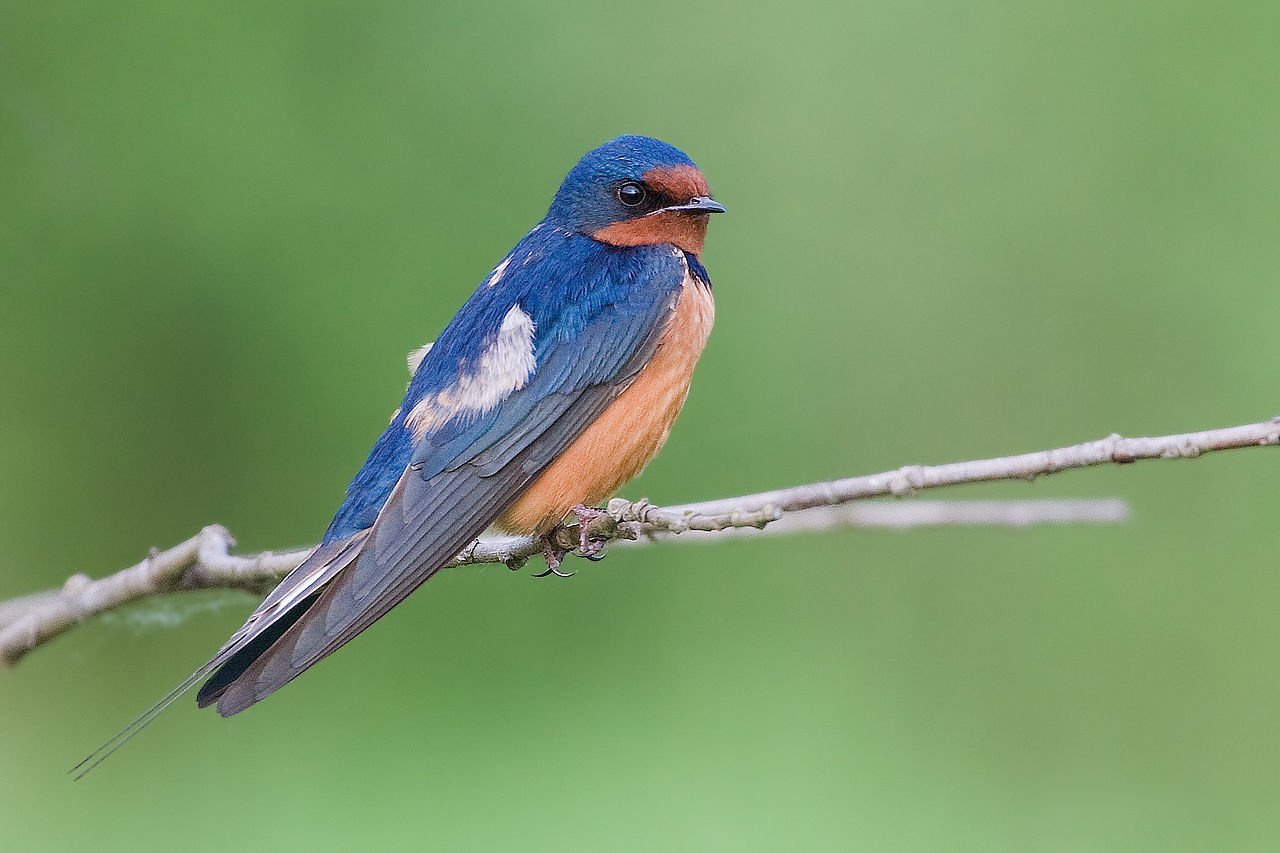
Barn Swallows are a threatened species in Ontario, with populations declining steeply across the province due to habitat loss. Swallowfield's barn hosts active nesting colonies each season. We maintain open access points, avoid disturbance during nesting, and monitor nest counts annually to track population health.
This is a private project, but one we're happy to share. If you're doing similar work nearby, have local species knowledge, or just want to talk about what's possible on your own land — reach out.
Rewilding works best at scale. If you're nearby in Grey County and interested in coordinating — even something as simple as leaving a fence line out — we'd genuinely like to talk about it.
Get in TouchKnow your local plants, amphibians, or birds well? We're always looking for people who can help us identify what we're seeing and understand what it means. Field visits to the properties are welcome.
Reach OutOntario Stewardship Program, iNaturalist, Invasive Species Centre ID guides, local native plant nurseries on the Escarpment. Happy to share the full list with anyone working on similar projects.
Request the ListRewilding is not a Canadian idea — it's a global one. Organisations across Europe, Africa, and the Americas are proving that when land is given space to recover, nature responds with remarkable speed. We draw inspiration from that work, and we aim to embody the same spirit here on the Escarpment.
Rewilding Europe, founded in 2011, has been among the most influential voices globally — restoring large wild areas, reintroducing keystone species, and demonstrating what's possible when governments, landowners, and communities align. Their model of working with natural processes rather than against them is exactly what we're trying to practice, at our own scale, in Canada.
Rewilding EuropeRewilding is about letting nature take care of itself, enabling it to rebuild complex ecosystems with food chains that once existed, and bring back biodiversity and natural processes.— Rewilding Europe
Both properties are located near Ravenna in Collingwood Township, Grey County — within the Niagara Escarpment UNESCO World Biosphere Reserve. A landscape that once supported far more biological complexity than it does today. We're trying to bring a small piece of it back, starting here.
LOCATION
Ravenna, Ontario
Grey County · Collingwood Township
Niagara Escarpment Biosphere Reserve
44°31′N 80°37′W